B2B strategy
How to run an interior design trade program on Shopify
By Jahangir Alam · September 18, 2026 · 9 min read
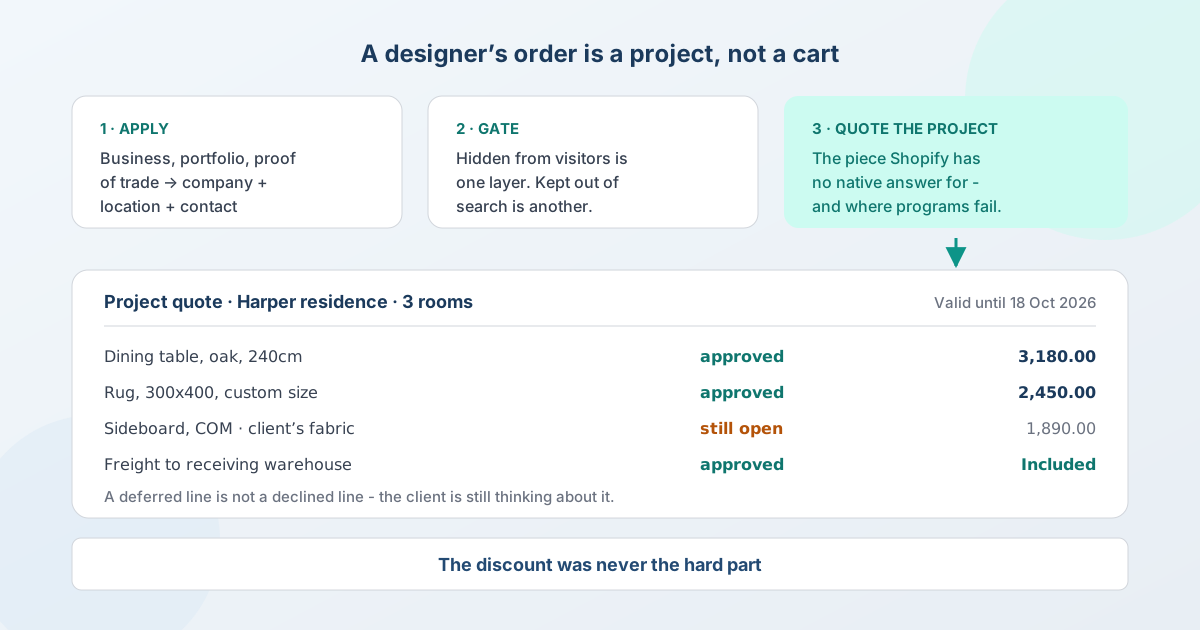
A trade program is a second, lower price list available only to people who resell or specify your product - interior designers, architects, stagers, contract buyers - plus the terms and the paperwork that go with it. On Shopify you build it from three pieces: a way to apply and be approved, prices that only appear once you're logged in as an approved trade account, and a way to quote a project rather than sell a cart.
The first two are mechanics. The third is where most trade programs quietly fail, because a designer's order is almost never a cart.
Why a designer's order isn't a cart
A retail buyer picks a thing and pays. A designer specifying the same thing is doing something structurally different:
- They are buying on someone else's behalf, and their client has to approve it before anything is ordered.
- They are buying many things across several rooms, often from several of your collections, as one project.
- They need the price before the sale, in a form they can hand to their client with their own margin on it.
- The lead times matter more than the prices, because an eight-week sofa decides an install date.
- It frequently ships to a receiving warehouse rather than to the designer or the client, for inspection and hold until install.
- Some of it isn't a catalogue configuration at all - a frame in the client's own fabric, a non-standard size, a finish you do but don't list.
"Add to cart" can express none of that. What the designer wants is a quote: a document with the specified items, the trade prices, the lead times and the freight position, which they can take to their client and come back to.
That is why a trade program that is only a discount code tends to stall. The discount was never the hard part.
The three pieces of a trade program on Shopify
1. Application and approval
Trade pricing is worth having only if it's gated, and gating means somebody checks.
What programs commonly ask for: business name and registration, a website or portfolio, the kind of work (residential, hospitality, contract), an estimated annual volume, and evidence they're in the trade - a business licence, a professional membership, or a resale certificate where that applies in their jurisdiction. Ask for what you'll actually read; a long form that nobody reviews is worse than a short one somebody does.
Shopify gives you the intake natively: a form creates a company, a company location and a customer contact, which is the shape you want anyway because the location is what carries the ship-to address and the terms. Taking wholesale applications on Shopify covers that setup in detail.
The part worth deciding up front is what an applicant can do while they wait. A designer who applies on Tuesday and hears nothing until Friday has, in the meantime, specified someone else's sofa.
2. Prices that only approved accounts see
Two different jobs, and they're worth separating because they have different requirements:
- Hiding the price from a logged-out visitor. This is the visual layer - retail visitors see a call-to-action instead of a figure.
- Keeping the trade price out of search results. This is a different problem with a different fix, because a price that a crawler can still reach will get indexed and then a client can find your trade price. The hide-price setup covers what each layer does and doesn't achieve.
The second matters more in this trade than most, because your trade price is the designer's cost and their client finding it is a commercial problem for them, not for you. It is the thing they will ask about.
3. Project quoting
This is the piece Shopify doesn't have natively and the reason a trade program needs a quote app rather than a discount.
What a project quote has to carry:
- Every specified item as its own line, with the finish, size, fabric and lead time on the line rather than in an email. A designer reading their own quote six weeks later needs to know which of two nearly identical chairs was specified.
- Custom lines for things that aren't catalogue products - a frame in the client's own material, a non-standard depth, a finish you'll do on request, white-glove delivery, a receiving fee.
- Freight, stated. To the receiver, not to the designer, and priced or explicitly included. Freight on a 90-inch sofa is not a rounding error and it should never be a surprise.
- An expiry date, because a project that slips two months should come back for a current price rather than hold your old one.
- A partial answer. The client approves the dining table and the rug, defers the sideboard, and wants to think about the lighting. The deferred items are still open - they haven't been declined, and the designer shouldn't have to re-specify them from scratch when the client comes back.
That last point is the one that separates a quote tool from a quote template. A project approval almost never comes back as a clean yes.
Tiers, and whether you need them
Two-tier (retail and trade) is enough for most brands, and adding tiers is a decision to take slowly, because every tier is a conversation you'll have with every designer who thinks they're in the one above.
If you do tier, tier on something observable and verifiable - annual volume with you, or project type - rather than on negotiating persistence. And write the tier onto the company record so it applies to every contact at that firm. A designer's assistant placing the order should get the same price as the principal who negotiated it.
Note the boundary of what Shopify's own pricing does here: catalogs and price lists give a company its own prices, which covers a static tier well. What they don't do is price a one-off project configuration - that's the quote.
What breaks, and how to not let it
The designer quotes their client from your retail price. Then your trade price arrives and the designer's margin is public. Gate properly, and keep the trade price out of anywhere a client could reach it.
Prices change mid-project. A designer specified in March and the client approves in August. Without an expiry on the quote you are in an argument; with one, you're issuing a current quote, which is routine.
The order goes to the wrong address. Designers ship to receivers, clients, job sites and their own studio, sometimes all four on one project. Company locations exist for this; use them rather than a note in the order.
Nobody knows what was agreed. Three months, four emails, two phone calls and a change of fabric later, "what did we actually specify?" needs one answer. That's a record question, not a document question - see what a quote record should keep.
A deposit was discussed but never taken. Made-to-order furniture on a project timeline is the classic case for a deposit at acceptance rather than payment in full up front.
Where to start
- Decide your trade discount and whether you're tiering. Two tiers unless you have a reason.
- Publish a trade page that says what the program gives and what you need to approve someone. Designers are comparing programs; make yours readable.
- Gate the prices, and check that the gate holds for crawlers as well as for visitors.
- Set up approval so an application gets an answer in a day, not a week.
- Add project quoting before you promote the program, not after. The first designer who wants a 14-line quote across three rooms will find out whether you have it.
FAQ
What is an interior design trade program?
A trade program gives qualified design professionals a lower price than retail, in exchange for verifying that they are in the trade and typically for buying on behalf of their clients. It usually combines a discounted price list with trade-specific terms - lead times, freight arrangements, sometimes payment terms - and a way to request a project quote rather than buying from the storefront.
How do designers qualify for trade pricing?
Requirements vary by brand, and there is no single standard. Common asks are a registered business, a portfolio or website showing design work, a professional membership, and in some jurisdictions a resale certificate. Whether a particular document is required or even available depends on where the designer operates, so check what applies in your market.
What is to-the-trade pricing?
To-the-trade pricing is a price available only to design professionals rather than to the public. The designer buys at that price and sells to their client at their own price, and the difference is part of how they are paid for the work. Keeping the trade price away from end clients is therefore something designers care about.
Can I run a trade program without Shopify Plus?
Yes for the core of it. Gated pricing and quote requests do not depend on it. Some capabilities in the wider B2B toolset do differ by plan, so check the specific feature you need rather than assuming the whole programme requires an upgrade.
What is COM in furniture ordering?
COM stands for customer's own material - the designer supplies the fabric and you build the frame in it. It matters for quoting because the item is no longer a catalogue configuration: yardage, the fabric approval and often a longer lead time all have to appear on the quote line rather than in a side conversation.
Should a trade quote include freight?
State it either way, always. Trade shipments are frequently large, frequently go to a receiving warehouse rather than an address the buyer gave you, and frequently cost enough to change the project decision. A freight line that reads as included is fine; a missing freight line is not.
Where QuotWay fits
QuotWay is a B2B quote and negotiation app for Shopify, built by EFOLI. For a trade program it covers the third piece: a designer requests a quote from the gated storefront with files attached, you price each specified line - including custom lines for a COM frame, a non-standard size or a receiving fee - and negotiate it on one record with every version kept. The client can approve part of the project while the rest stays open, you can take a deposit at acceptance on the plans that support it, and the approved lines convert to a native Shopify draft order at the agreed figures. See how negotiation works, quoting for manufacturing and custom orders if you build to order, or the plans and pricing.
Sources
Related articles
See how QuotWay handles this on your store.