Shopify how-to
Bulk order forms on Shopify: order and quote by SKU
By Jahangir Alam · July 1, 2026 · Updated August 22, 2026 · 7 min read
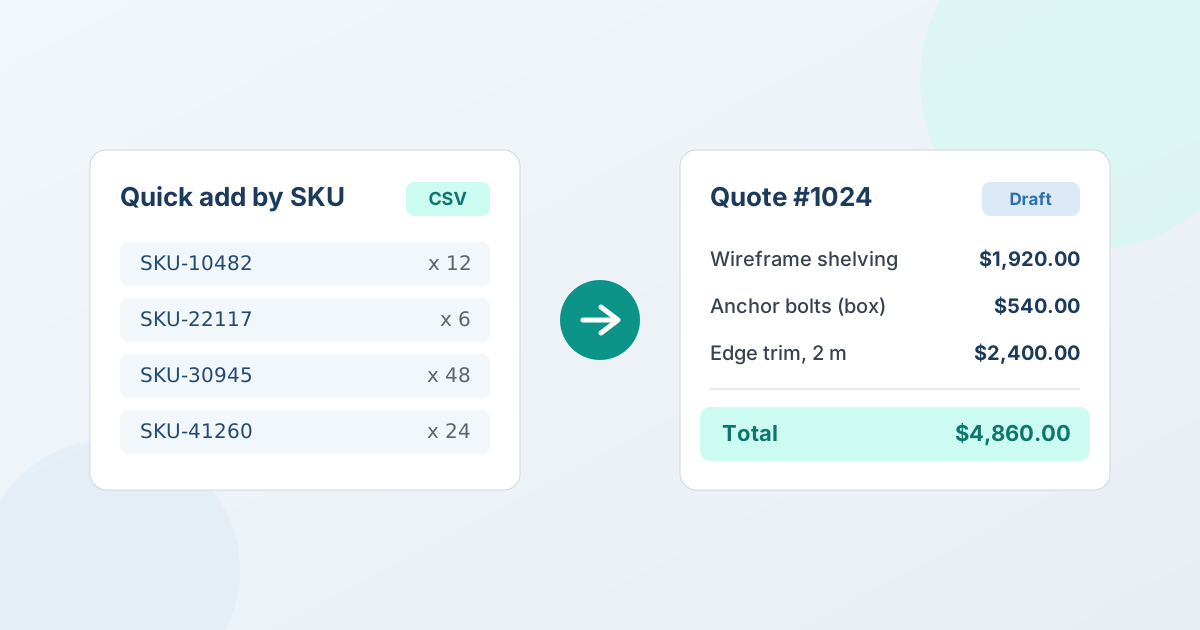
A bulk order form lets a B2B buyer add many products at once by SKU - pasting a list or uploading a CSV - instead of adding products one at a time. On Shopify you can offer this two ways: as a quick reorder that drops items straight into the cart, or as a request that comes back as a priced, negotiable quote. This guide explains the difference, your options, and how to set up the quote route step by step.
What is a bulk (quick) order form?
A bulk order form - also called a quick order form or a quick order list - is a single screen where a buyer types or pastes SKUs with quantities and adds them all in one action. Instead of searching for each product, opening its page, and clicking add, the buyer works from the list they already have: a monthly reorder sheet, an exported spreadsheet, or a purchase order from their own system.
It is a B2B pattern, not a retail one. A consumer buys one or two things; a wholesale buyer, a procurement officer, or a sales rep placing an order on a customer's behalf works from a list of dozens of line items - often the same list every month.
Why one-at-a-time breaks down for B2B
A storefront built for retail assumes a small basket. Ask a trade buyer to rebuild a 40-line order by searching for each product and you get three problems: it's slow, it's error-prone (wrong variant, missed line, fat-fingered quantity), and large orders get abandoned halfway through. The buyer already knows exactly what they want by SKU - the job is to let them enter it as fast as they can read it off their sheet.
Your options on Shopify
There are three broad ways to give buyers a faster entry path, and they solve different problems:
- Native Shopify. A standard storefront has no built-in field for entering a list of SKUs - buyers add products from product and collection pages. Shopify's native B2B adds ordering tools for logged-in company buyers, but if you need list-style entry on a standard store, you'll reach for an app.
- Quick-order / bulk-order apps. These add a grid or SKU box that drops items straight into the cart at your published prices. Good when prices are fixed and the buyer just needs speed.
- Quote apps. When the order needs a price, a volume discount, payment terms, or sign-off before it's final, the buyer wants a quote, not an instant cart. A quote app takes the same SKU list and turns it into a proposal you can price and negotiate - and a file-upload field on the quote form lets the buyer attach the spreadsheet they already have (which fields to ask for).
Order by SKU vs quote by SKU - which does your buyer need?
Clinics, dental practices and labs are the clearest case of needing both at once - a pasted reorder list for consumables and a negotiated quote for equipment. Dental and lab supply ordering covers that split.
The deciding question is whether the price is already settled. If the buyer is reordering known items at known prices, a quick add-to-cart form is the fastest path. But many B2B reorders only look like that: the buyer expects their negotiated price, a volume break on the big lines, or net terms - and a straight add-to-cart can't capture any of it.
When pricing, terms, or approval are in play, the buyer needs a quote. A quote takes the SKU list, prices it the way the deal actually works, lets both sides counter, and converts to a real order once it's agreed. On Shopify, QuotWay handles that route - see how quote requests work.
How to build a quote from a list of SKUs with QuotWay
QuotWay's Quick add by SKU turns a list into priced quote lines in one step. Here's the flow.
Paste a SKU list or upload a CSV
From the Quotes page, open Quick add by SKU, paste your list of SKUs (or upload a CSV), and QuotWay resolves them to priced lines at once. Duplicate SKUs are merged, and anything that can't be quoted is called out before you send. Quick add by SKU is available on Professional and up.
Review the resolved lines
Check quantities, remove any lines you don't want, and adjust as needed. For a logged-in B2B company buyer, the proposal starts from that buyer's company-location catalog, and any line that isn't on their catalog is flagged - so you quote from the company's own prices, not generic retail. (Company-aware catalog pricing is on Enterprise with a B2B-capable store.)
Price, negotiate, and convert to an order
Send the proposal, counter-offer if you need to, and when it's agreed, convert the accepted quote to a native Shopify draft order with the negotiated prices. If you set payment terms such as Net 30 on the quote, the order carries them - on any quote, on every plan.
Buyers can start this themselves, too: a logged-in buyer can paste SKUs or upload a CSV from their Shopify customer account, adjust quantities, and submit the request - the same one-step build, from their side.
From a SKU list to a Shopify order
The point of building a quote from a SKU list isn't just speed at entry - it's that one list becomes a priced, negotiable quote and then a real Shopify draft order, with nothing leaving Shopify and no spreadsheet to reconcile. And because the whole exchange lives in one place, the next reorder is faster still: buyers can pick up a past quote from their buyer portal or customer account and request the same items again. For the bigger picture of selling to trade buyers, see the guide to selling wholesale on Shopify, and compare the tiers on pricing.
Frequently asked questions
Can buyers request a quote for a long list of SKUs at once?
Yes, on Professional and up. From the Quotes page you can build a quote from a list of SKUs - paste them or upload a CSV - and QuotWay resolves them to priced lines in one step, merging duplicate SKUs and flagging anything that can't be quoted. Logged-in buyers can do the same from their Shopify customer account.
Is this a bulk product import?
No. Quick add by SKU builds a quote from a list of SKUs; it does not import products or catalog data into your store. Your products and prices stay in Shopify - QuotWay just resolves the SKUs you enter into quote lines.
Does the buyer pay straight away, or is it a quote first?
It's a quote first. The SKU list becomes a proposal you can price and negotiate, and only the accepted quote converts to a Shopify draft order - so volume pricing, payment terms, and any sign-off happen before the order is created.
Related articles
See how QuotWay handles this on your store.