B2B strategy
Dental and lab supply ordering: reorders, contract pricing, and POs
By Jahangir Alam · September 18, 2026 · 8 min read
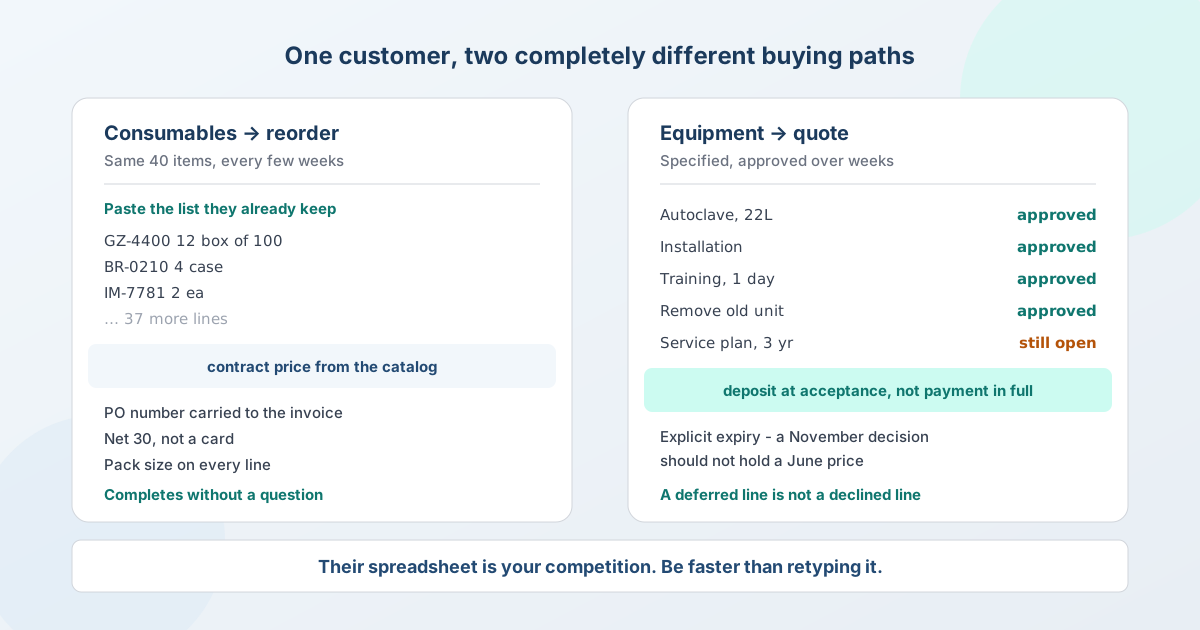
Clinic and lab supply buying splits cleanly in two, and a store that treats it as one thing gets both halves wrong.
Consumables are a reorder. The same forty items, every few weeks, at prices already agreed, approved by a practice manager against a budget and sent out on a purchase order. Nobody browses. The buyer wants last month's list with the quantities changed.
Equipment is a quote. A chair, an autoclave, a mill, a centrifuge - specified, negotiated, often with installation and training on the same document, frequently with a deposit and a lead time that decides a room's refit date.
Build the reorder path for the first and the quote path for the second. The common failure is building a catalogue for both, which leaves the consumables buyer paging through products they order every month and the equipment buyer with no way to ask a question.
Why the reorder list is the product
A practice ordering supplies is doing inventory replenishment, not shopping. The artifact they actually work from is a list - and if you don't give them one, they keep their own, in a spreadsheet, with your part numbers in it.
That spreadsheet is worth thinking about, because it is your competition. It already has their usual items, their usual quantities and their own internal names for things. Whatever you build has to be faster than retyping it, or they will keep retyping it.
What makes a reorder path faster than their spreadsheet:
- Paste a list. Part numbers and quantities, in one step, resolved against your catalogue. This is the single highest-value thing you can offer this buyer, because it is exactly the shape of what they already have. The bulk order form is that path.
- Reorder from history. Last order, editable. Most reorders are the previous order with three changes.
- Their part numbers, not just yours. A practice that has called an item "4x4 gauze, non-sterile" for nine years will search for that.
- Pack size on the line. "Box of 100" versus "each" is the most common quantity error in supply ordering and it is entirely preventable with a unit of measure on the line.
Contract pricing, buying groups, and what Shopify does natively
Supply buyers rarely pay list. Pricing usually arrives from one of:
- An account-specific agreement - negotiated annually, sometimes with volume commitments.
- A buying group or GPO - the practice joins a group and inherits the group's negotiated pricing. Dental in particular is full of these, and a practice will tell you which one they're in.
- A multi-practice agreement - a group operator with several locations, where the contract is at the top and the ordering happens at each site.
Shopify B2B handles the static part of this well. A catalog pairs a product selection with a price list and attaches to a company or to a specific company location, so a group operator's individual practices can each order at contract prices and ship to their own address. How Shopify B2B catalogs and price lists work covers the mechanics.
What catalogs don't do is the negotiation that produced the contract, or anything priced per-request. That's the quote side.
Purchase orders and terms
Two things this buyer will need, and both are worth getting right before you chase the account:
A purchase order number on the order. Practice and lab purchasing typically runs PO-first: the manager raises a PO, you supply against it, and your invoice has to carry the number or accounts payable will not match it. A store with no field for a PO number creates manual work on their side for every order. Purchase orders on Shopify covers where the number lives.
Terms rather than a card. Net 30 is the default expectation, and a practice being asked to pay by card for routine consumables is a practice that will keep its existing supplier. Shopify B2B payment terms covers the setup.
Back-orders and substitutions are the real relationship test
Supply ordering is a business of things being out of stock. How you handle that is more visible to the customer than your pricing, because it happens constantly and it affects a clinical day.
The three decisions to make explicitly:
- Partial shipment or hold? A practice out of one item usually wants the other thirty-nine now. Defaulting to holding the whole order is the wrong answer more often than not - but it should be their call, on the record, not your assumption.
- Will you substitute? An equivalent item from another manufacturer is sometimes exactly right and sometimes unacceptable, and only the buyer knows which. Never substitute silently.
- What do you tell them, and when? A back-order they learn about on the delivery day is a problem; one they learn about at order time is a decision.
None of that is quoting software's job, but all of it should be answerable on the order rather than in somebody's memory.
There's also the compliance layer - lot numbers, expiry dates, recall traceability - which practices and labs genuinely need and which lives in your inventory and fulfilment systems rather than in a quote. Worth knowing where it lives before a customer asks.
The equipment side: what needs a quote
Capital purchases behave nothing like consumables:
- The specification is the negotiation. Model, configuration, what's included, what's extra. Installation, removal of the old unit, training, a service plan - each of those is a line with a price, not a footnote.
- The approval is real. A practice owner, sometimes a partner group, sometimes a lender. This takes weeks, which means the quote needs an explicit expiry so a decision in November isn't made against a June price.
- The answer is often partial. They take the unit and the installation, defer the service plan, and want to think about the second chair. The deferred items are still open - not declined - and shouldn't have to be re-specified when the answer comes.
- A deposit is normal. Equipment on a lead time with a refit date attached is the standard case for taking part of the money at acceptance rather than all of it up front.
This is a quote workflow, and it is worth keeping visibly separate from the reorder path in your storefront. A buyer who needs to ask about a mill should not end up in a bulk order form, and a manager reordering gauze should never see a "request a quote" button.
How to structure it
- Companies and locations first. One company per practice group, one location per site. Terms, ship-to and catalog all hang off the location, which is what a multi-site operator needs.
- Contract prices in a catalog attached to the company or location.
- A reorder path that accepts a pasted list and can reorder from history.
- A quote path for equipment, capital and anything configured - with file attachments, because equipment requests come with specs and site photos.
- PO number and payment terms on both paths.
- An explicit back-order policy, written down, on the order.
FAQ
What is the best way to take dental supply orders online?
Give the buyer a list-based reorder path rather than a catalogue to browse, because supply ordering is replenishment of the same items rather than discovery. The highest-value features are pasting a list of part numbers with quantities, reordering from a previous order, showing pack size on every line, and carrying a purchase order number through to the invoice.
How do contract prices work for a multi-site practice group?
Put the agreement at the company level and the ordering at the location level. Each site gets its own address, its own contacts and often its own terms, while the negotiated price list applies across the group. That way a new practice joining the group inherits the pricing without a new negotiation.
Should equipment and consumables use the same checkout?
No. Consumables are a reorder against agreed prices and should complete without anyone being asked a question. Equipment is specified, negotiated and approved over weeks, and needs a quote with an expiry, itemised installation and training, and room for a partial answer.
What is a GPO in dental or medical supply?
A group purchasing organization negotiates pricing on behalf of many practices or facilities, and a member buys at the group's agreed rates. If a customer tells you they are in a buying group, their price is likely set by that agreement rather than by a negotiation with you directly.
Can a practice manager order without seeing prices they shouldn't?
Yes - pricing on a B2B account follows the catalog assigned to that company or location, so what a contact sees is the contract price for their organization rather than list or another customer's rate.
Do supply orders need a purchase order number?
Most practice and lab purchasing runs PO-first, so assume yes unless a customer tells you otherwise. The number has to reach your invoice, or the buyer's accounts payable team cannot match it and payment stalls even though nothing is in dispute.
Where QuotWay fits
QuotWay is a B2B quote and negotiation app for Shopify, built by EFOLI. It covers the equipment half of the split above: a practice or lab requests a quote with specs and site photos attached, you price the unit, the installation, the training and the removal as separate lines, negotiate on one record with every version kept, take a deposit at acceptance on the plans that support it, and convert the approved lines into a native Shopify draft order at the agreed figures. A buyer can approve the unit now and leave the service plan open. See how negotiation works, bulk quote requests by part number for the list-paste path, or the plans and pricing.
Sources
Related articles
See how QuotWay handles this on your store.